
Coroner links fatality to unapproved “peptides”
In March 2025, 75 year old Richard Norton passed away following cardiac arrest after he had injected the growth hormone analogue CJC-1295, and the synthetic pentapeptide (or “peptide”) Ipamorelin.
On Wednesday 28th October this year, Coroner David Ryan handed down his findings that Norton’s death resulted from his use of the peptides and hormone analogue. This is the first confirmed fatality from peptide use in Australia, although not the first time Australian health authorities have expressed concern at this rising unregulated trend.
Norton had been prescribed the unapproved medications from his doctor, Jerzy Muchnicki, yet hours before his death he told a nurse at the practice he had been “double dosing”. The ABC report that the nurse advised him to follow the prescribed dosage, yet shortly after when Norton injected a dose of CJC-1295 and Ipamorelin, he became unresponsive.
Coroner advises Therapeutic Goods Administration (TGA)
The ABC further report:
The coroner recommended the Therapeutic Goods Administration (TGA) review the therapeutic benefits and safety risks of peptides such as CJC-1295 and Ipamorelin and “consider whether further restrictions ought to be imposed on their use”.
In May this year the TGA published a warning on the risks of importing such unapproved peptides, with particular emphasis on the lack of proper labelling and the absence of safety testing. This was followed by another in June, in conjunction with Australia’s Chief Medical Officer. Following the coronial finding the TGA stated that it:
… continues to warn consumers about the risks of unapproved peptides which have not been assessed by the TGA for safety, quality or effectiveness.
And:
We are continuing to assess the risks associated with these products and considering whether further regulatory or other measures may be appropriate.
Medical Board Investigation
The coronial report into Norton’s death noted that The Australian Health Practitioner Regulation Agency had previously been notified about Dr. Muchnicki’s treatment of Norton. The Medical Board of Australia (MBA) conducted an investigation, including a report from clinical professor Alistair Vickery. Professor Vickery observed:
There is insufficient evidence that CJC1295/Ipamorelin is safe, effective or beneficial for human use.
However, given Norton’s prior use of peptides and the written consent Dr. Muchnicki had gained from Norton, Vickery stated, “the clinical care provided by Dr Muchnicki was at a standard reasonably expected”. Nonetheless he observed Muchnicki’s notes were sparse and his performance as a practitioner was below standard for such an issue.
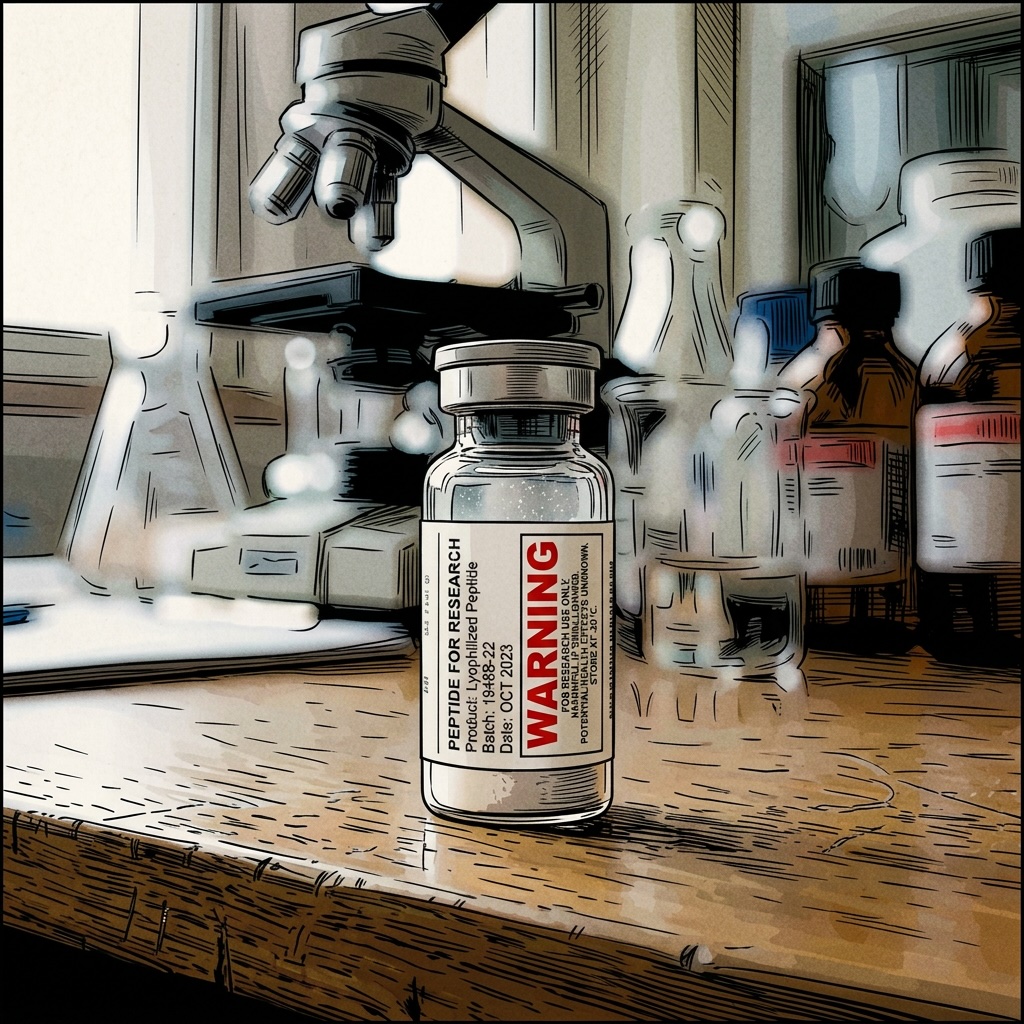
What are peptides? What is “stacking”?
Chemically speaking, perhaps the best way to grasp what a peptide is, is to revisit what proteins are. This Wikipedia page on proteins has an image displaying the 3D nature of proteins, and touches on the nature of peptides. Proteins contain a minimum of 50 amino acids. Proteins will contain at least one polypeptide consisting of multiple peptides (above 50). The peptides that we’re interested in are best described as short chains of amino acids linked by peptide bonds. You are most welcome to read up on peptide bonds here.
Peptides (oligopeptides) contain 2 to 20 amino acids. We eat peptides, our body manufactures them and they can of course be manufactured in laboratories. The action of peptides explains their popularity. They bind to receptors on many types of cells and signal the promotion of biological processes. These may be pain relief (endorphins), skin repair and elasticity (collagen) and indeed those which have become very important to weight loss (GLP-1) and blood sugar control (insulin). Thus anti-ageing, weight loss, muscle growth and injury recovery are common claims from influencers pushing peptides.
“Stacking” involves the use of specific peptides and pentapeptides to achieve a spike in growth hormone and an extension of its half life. For example in the case of Richard Norton, his use of CJC-1295 is an unapproved way to stimulate the pituitary gland to release more growth hormone. When combined or “stacked” with the peptide Ipamorelin, the aim is to evoke a growth hormone spike, which is sustained by the growth hormone releasing analogue CJC-1295. Better known as a Drug Affinity Complex (DAC), CJC-1295 may elevate growth hormone by up to 10 times for 6 days, and insulin-like growth factor (IGF-1) three-fold, by up to 11 days.
Peptide induced harm and hospitalisation
As the use of peptides has risen in Australia, so has the level of physical harm and consequent hospitalisation. In August this year the death from heart failure of Alex Boutin, led to increased focus on peptide use, from The Australian Health Practitioner Regulation Agency. In fact, Boutin’s death led to further consideration of how social media also impacts male users developing irrational obsession with body image. Use of steroids and peptides in men, is an indicator of a potential eating disorder, according to experts. [Peptide use linked to eating disorders – ABC AM programme – 3min, 7s].
NSW Health documented 1,180 presentations to hospital emergency departments following peptide use, between July 1, 2025, and September 30, 2026. Monthly attendances increased from 5 to over 220 during this period. In June this year, Victoria reported acute care requirements for severe anaphylaxis, acute liver toxicity and hospital admission resulting from peptides. Particularly Retatrutide, Reta, R-10 and R-20. WA has reported similar concerns as has QLD, Tasmania, the ACT and the NT.
Harms reported, overwhelmingly stress liver and kidney damage, unexplained hepatitis, unexplained acute pancreatitis, anaphylaxis and severe allergic reactions, GI distress and intractable vomiting. Warnings note that unsterile injecting can lead to systemic infections, sepsis, cellulitis or tissue damage resulting in amputations and skin grafts. Where testing has been done the peptide preparation has included impurities or been as low as 51% or as high as 190% of the advertised concentration. Some lack the ingredients entirely.
Unapproved and untested products include Retatrutide (liver toxicity), BPC-157, TB-500, CHK-Cu, CJC-1295, Melanotan II and more. In June this year RFK Jr. “unbanned” 14 peptides. You can read more on this here. The demand for peptides in Australia has been so great that Needle and Syringe Programmes established to prevent the spread of blood borne disease amongst injection drug users, have reported an impact on service provision.
There is little doubt that the promotion of peptides on social media is having a rapid and deleterious effect on many of those who choose to use them. Finally, there is no reliable evidence that influencers can offer improved health and longevity to their followers.
Further Reading: